De plus en plus d'Américains choisissent de quitter les États-Unis pour prendre un nouveau départ en Europe. Que ce soit pour le télétravail, une meilleure couverture santé, un meilleur mode de vie ou plus de sécurité, cette tendance s'accélère en 2026, alimentée par un intérêt croissant dû au coût élevé de la vie aux États-Unis, à l'accès limité aux soins de santé et aux inquiétudes liées à la criminalité et à la stabilité politique.
Même si l'Europe durcit ses règles en matière de résidence par le biais de l'ascendance, de la naturalisation ou des investissements, des destinations populaires comme le Portugal, l'Espagne et l'Allemagne restent les choix préférés des expatriés.
Europe has been a major source of North American immigration and population growth for more than five centuries.
Dans cet article, nous examinons les principales raisons qui poussent les Américains à s'installer en Europe et les possibilités de visa qui s'offrent à eux pour concrétiser leur projet.
Une relation migratoire ancienne entre l’Europe et l’Amérique du Nord
Europe has been a major source of North American immigration and population growth for more than five centuries.
immigrants began to wane in the second half of the 20th century.
immigration policy in 1965 opened pathways for non-European immigrants, bright economic opportunities in post-World War II Western Europe made emigration less attractive, and Communist governments in most Eastern Europe countries erected barriers to emigration, all of which led to a significant drop in both the numbers and share of European immigrants in the United States.
immigrants, their share fell to 22 percent by 1990.
Européens représentent le troisième plus grand groupe d’immigrants aux États-Unis selon la région d’origine, après ceux des Amériques (52 percent) et d’Asie (31 percent).
The European immigrant population has mostly declined over the last four decades, except for during the post-Cold War period between 1990 and 2000.
It decreased by 16 percent between 1980 and 1990, and then increased by 13 percent from 1990 to 2000.
Between 1990 and 2010, the number of Eastern European immigrants increased significantly due in part to the dissolution of Czechoslovakia, the Soviet Union, and Yugoslavia.
This growth began to taper off with enlargements of the European Union in 2004 and 2007; when many Eastern European countries joined the bloc, their nationals had easier access to other Member States and felt less pull to migrate to the United States.
Les chiffres de l’immigration européenne aux États-Unis
In 2022, Eastern European immigrants accounted for the largest share of Europeans in the United States, at 46 percent.
They were followed by Western and Northern Europeans, who each made up about 19 percent.
| Indicateur | Donnée |
|---|---|
| Part des immigrants européens originaires d’Europe de l’Est en 2022 | 46 percent |
| Part des immigrants originaires d’Europe occidentale | about 19 percent |
| Part des immigrants originaires d’Europe du Nord | about 19 percent |
| Étudiants européens aux États-Unis pendant l’année universitaire 2022-23 | approximately 90,000 |
| Part des étudiants européens parmi les étudiants internationaux | about 9 percent |
Recently, the Russian invasion of Ukraine has sparked new movements to the United States, with Ukrainians and Russians alike seeking refuge and opportunity.
Russia’s full-scale invasion of Ukraine in early 2022 led to Europe’s largest displacement crisis since World War II and forced millions of Ukrainians to flee their country.
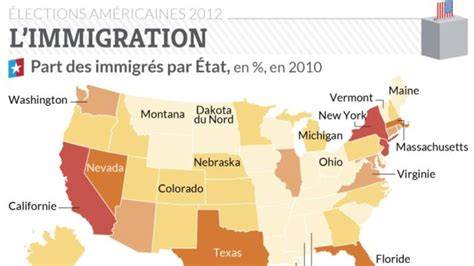
Immigrants from Europe were highly concentrated in New York and California (15 percent and 14 percent, respectively) in the 2017-21 period.
The next three most populous states-Florida, Illinois, and New Jersey-were home to approximately 22 percent of the European population collectively.
The top five counties for European immigrants were Cook County, Illinois; Kings County, New York; Los Angeles County, California; and Queens and New York counties in New York.
The greater New York, Chicago, and Los Angeles metropolitan areas were home to 30 percent of European immigrants in the United States as of the 2017-21 period.
Profil des immigrants européens aux États-Unis
born, European immigrants are more likely to hold a bachelor’s degree and have a higher income.
European immigrants also tend to be considerably older than the overall foreign- and native-born populations.
Européens âgés de 25 ans et plus présentent des taux de niveau d’études nettement supérieurs à ceux des populations nées aux États-Unis et de l’ensemble des personnes nées à l’étranger.
The educational attainment of European immigrants can be explained by the high levels of education in origin countries as well as the channels through which they enter the United States.
In the 2022-23 school year, approximately 90,000 international students from Europe studied in the United States, comprising about 9 percent of all 1.1 million international students.
Several European countries were among the top 20 countries of origin for immigrants receiving coveted H-1B visas in FY 2022.
Reflecting their older average age, European immigrants participate in the labor force at a lower rate than both the native- and overall foreign-born populations.
In 2022, about 59 percent of Europeans ages 16 and over were in the civilian labor force, compared to 67 percent of all immigrants and 62 percent of the native born.
Management, business, science, and art occupations were the primary occupational group for immigrants from all European countries for which data were available, although the share of workers in those occupations varied.
Approximately 72 percent of immigrants born in France worked in those occupations, compared to 48 percent of Ukrainians and 36 percent of immigrants from Portugal and Bosnia and Herzegovina.
European immigrants tend to have significantly higher incomes than the native born and immigrants overall.
In 2022, 10 percent of Europeans were living in poverty, compared to 12 percent for the native born and 14 percent for immigrants overall.
Poverty levels varied by country of origin; 14 percent of immigrants from Russia and Ukraine reported living in poverty, as did 7 percent of those from the United Kingdom, Ireland, and the Netherlands.
European immigrants are more likely to have health insurance coverage than the overall foreign-born population and have a similar uninsured rate as the native born.
Les principales raisons de s’installer en Europe
La liberté du travail à distance
Grâce à l'essor du télétravail, de nombreux Américains n'ont plus besoin d'être liés à un bureau physique.
Plusieurs pays européens proposent désormais des visas pour nomades numériques aux employés ou freelances travaillant à distance pour des entreprises basées aux États-Unis, même si 2026 s'accompagnera d'un relèvement des seuils de revenus et de nouvelles obligations d'épargne dans des domaines clés.
Portugal : visa nomade numérique D8
Portugal (visa nomade numérique - D8): mis à jour pour 2026 avec un revenu mensuel minimum de 3 680 € pour les particuliers (soit une augmentation de 200 € par rapport à 2025), plus une épargne requise de 11 040 €.
Les familles ont besoin de 5 520 € par mois pour les couples et de 6 624 € pour les familles de trois personnes, avec des économies proportionnelles.
Le délai d'obtention de la citoyenneté est désormais de 10 ans (contre 5 auparavant).
Espagne : visa pour nomades numériques
Espagne (visa pour nomades numériques): conditions stables, avec un revenu minimum de 2 646 € par mois (environ 200 % du salaire minimum).
Offre des avantages fiscaux pendant les premières années et une grande flexibilité en matière de lieu de résidence.
Estonie : visa pour nomades numériques
Estonie (visa pour nomades numériques): jusqu'à 1 an, revenu mensuel minimum requis de 4 500 €.
Idéal pour les nomades férus de technologie bénéficiant des avantages de la résidence électronique ; aucun changement majeur prévu en 2026.
Ces visas permettent aux Américains de vivre légalement en Europe tout en travaillant en ligne, souvent avec des avantages fiscaux et des procédures simplifiées, mais il faut s'attendre à des délais de traitement plus longs.
Un meilleur équilibre entre vie professionnelle et vie privée
De nombreux professionnels américains sont attirés par l'accent mis par l'Europe sur l'équilibre entre vie professionnelle et vie privée.
Des pays comme l'Allemagne, la France et les Pays-Bas offrent :
- 20-30+ jours de congés payés
- Des semaines de travail plus courtes
- Congé familial protégé
Avec moins d'épuisement professionnel et plus de temps pour la famille ou les voyages, il n'est pas surprenant que cela soit une motivation majeure, d'autant plus que les télétravailleurs américains recherchent la stabilité à l'étranger.
Des soins de santé moins coûteux
Même sans résidence permanente, les Américains vivant en Europe bénéficient souvent d'un accès à des soins de santé abordables et de haute qualité.
Des pays comme l'Espagne, le Portugal et l'Allemagne proposent des systèmes de santé publics et des options d'assurance privée qui coûtent une fraction des tarifs américains, où les primes familiales moyennes dépassent désormais 500 dollars par mois, avec des hausses de 9,6 %.
Exemple : une assurance privée au Portugal coûte environ 50 € par mois, contre plus de 500 $ par mois aux États-Unis.
Le coût et la qualité de vie
Si des villes comme Londres ou Paris peuvent être chères, de nombreuses régions d'Europe sont étonnamment abordables, en particulier dans le contexte des pressions économiques de 2026.
Portugal: loyers moins élevés, produits alimentaires bon marché, quartiers sûrs...
Porto se distingue pour les expatriés avec un coût de la vie inférieur à 2 000 € par mois pour un couple.
Espagne: villes côtières abordables et ensoleillées ; Valence ou Alicante offrent une excellente qualité de vie pour 1 500 à 2 500 € par mois.
Europe de l'Est: frais quotidiens moins élevés, en particulier pour les travailleurs numériques - La Bulgarie (Sofia), la Roumanie (Bucarest) et l'Albanie sont les pays les moins chers du continent, avec des coûts inférieurs de 40 à 60 % à ceux de l'Europe occidentale.
La sécurité et la stabilité politique
De nombreux Américains citent la sécurité et la cohésion sociale comme principales raisons de s'installer à l'étranger.
Des villes comme Zurich, Vienne et Helsinki se classent régulièrement parmi les plus sûres au monde, avec un faible taux de criminalité et des infrastructures solides, en tête des classements 2026 aux côtés de Copenhague et Oslo.
La double nationalité et la résidence de longue durée
L'Europe offre des voies claires vers la résidence permanente et même la citoyenneté, bien que certains délais se soient allongés dans le cadre des réformes en matière d'immigration.
Portugal: résidence permanente après 5 ans ; citoyenneté désormais après 10 ans (contre 5 ans en 2025).
Allemagne: les titulaires d'une carte bleue peuvent prétendre à la résidence permanente au bout de 33 mois (ou 21 mois s'ils maîtrisent la langue).
Seuils salariaux actualisés pour 2026 : 50 700 € en général ou 45 934 € pour les professions en pénurie.
Espagne: parcours de 10 ans vers la citoyenneté pour les citoyens américains (2 ans pour les personnes d'ascendance latino-américaine)
Dans de nombreux cas, les Américains peuvent conserver leur citoyenneté américaine tout en obtenant une autre nationalité, 62 pays autorisant la double nationalité.
L’éducation et les prestations familiales
Les familles qui s'installent en Europe bénéficient d'une éducation gratuite ou peu coûteuse, y compris l'accès à des écoles internationales.
Allemagne: Universités publiques gratuites
France: Soins et scolarisation subventionnés pour les enfants
Espagne/Portugal: options d'éducation bilingue, avec des programmes internationaux adaptés aux expatriés qui favorisent l'intégration culturelle.
La richesse culturelle et les possibilités de voyage
Des escapades d'un week-end en Italie ou en Croatie à la possibilité de vivre à proximité d'une architecture séculaire et d'œuvres d'art de renommée mondiale, l'Europe offre une diversité culturelle inégalée.
Avec des soins de santé abordables, des options de travail flexibles, des villes plus sûres et un rythme de vie plus lent, de plus en plus d'Américains disent oui à l'Europe, même si les voies d'accès évoluent.

Les catégories de visas et de séjour dans l’Union européenne
If you’re a non-EU national looking to move to an EU country for work, study or to join a family member, you may be entitled to certain rights under EU immigration rules.
The EU and EU countries share competences in this area, but it’s up to each EU country to take the final decision on individual migrant applications.
In areas where no EU rules have been adopted, EU countries can also set the conditions on obtaining residence and work permits in their country.
You should always apply for a visa or residence permit directly from the authorities of the EU country you plan to move to.
There’s no EU institution that handles applications or issues visas or residence permits on behalf of individual countries.
Qui peut être concerné par les règles européennes ?
The EU’s common immigration and visa rules apply to the following individuals looking to move to an EU country for longer than 90 days:
- highly qualified workers
- intra-corporate transferees (non-EU nationals with a work contract in a company established outside of the EU, who are offered a role in a branch of the organisation in an EU country)
- seasonal workers
- researchers
- students
- trainees and volunteers (there are EU rules on exchange pupils and au pairs that EU countries may decide to apply in their national legislation).
If you’re from a country from outside the EU, but are staying legally in an EU country, the rules also allow you to:
- bring family members with you
- become a long-term resident after 5 years of residence.
These rules apply in all EU countries except Denmark and Ireland.
Les droits liés à la catégorie de séjour
Information on the categories of people covered by the rules.
Rules on visas, residence permits and family members joining you by category of eligible individuals.
Information about coming to work or study in the EU for more than 90 days and how to join your family.
Learn about your rights and what to do if you’d like to move from one EU country to another.
Information about national higher education systems, funding opportunities and visas and residence permits in EU countries covered by the Study in Europe project.
Les voies d’accès pour travailler, étudier ou rejoindre sa famille
Travail qualifié et carte bleue européenne
Plusieurs pays européens proposent des voies spécifiques aux travailleurs hautement qualifiés.
Allemagne: les titulaires d'une carte bleue peuvent prétendre à la résidence permanente au bout de 33 mois (ou 21 mois s'ils maîtrisent la langue).
Seuils salariaux actualisés pour 2026 : 50 700 € en général ou 45 934 € pour les professions en pénurie.
Several European countries were among the top 20 countries of origin for immigrants receiving coveted H-1B visas in FY 2022.
Études et recherche
Les étudiants et les chercheurs font partie des catégories couvertes par les règles communes de l’Union européenne pour les séjours de plus de 90 jours.
Information about coming to study in the EU for more than 90 days and how to join your family.
Information about national higher education systems, funding opportunities and visas and residence permits in EU countries covered by the Study in Europe project.
Allemagne: Universités publiques gratuites
Espagne/Portugal: options d'éducation bilingue, avec des programmes internationaux adaptés aux expatriés qui favorisent l'intégration culturelle.
Regroupement familial
Si vous êtes ressortissant d’un pays extérieur à l’Union européenne mais séjournez légalement dans un pays de l’UE, les règles permettent également de faire venir des membres de votre famille.
Rules on visas, residence permits and family members joining you by category of eligible individuals.
La majorité de ces permis étaient délivrés chaque année principalement pour des raisons familiales (35 % en 2019), suivies par les études (24 % en 2019), le travail (22 % en 2019) et d'autres raisons, notamment la protection nationale et internationale (18 % en 2019).
Résidence, citoyenneté et naturalisation
Les procédures de résidence et de citoyenneté dépendent du pays, du type de visa et de la situation personnelle du demandeur.
If you’re from a country from outside the EU, but are staying legally in an EU country, the rules also allow you to become a long-term resident after 5 years of residence.
Les délais mentionnés ne s’appliquent pas uniformément à tous les pays et peuvent être modifiés par les réformes nationales.
Portugal: résidence permanente après 5 ans ; citoyenneté désormais après 10 ans (contre 5 ans en 2025).
Espagne: parcours de 10 ans vers la citoyenneté pour les citoyens américains (2 ans pour les personnes d'ascendance latino-américaine)
Dans de nombreux cas, les Américains peuvent conserver leur citoyenneté américaine tout en obtenant une autre nationalité, 62 pays autorisant la double nationalité.
Pathways to permanent residency vary by country of origin.
Les demandes d’asile et les titres de séjour des citoyens américains
The number of American citizens who applied for asylum in the EU were 15385 in 2016 (54% male and 46% female), 30245 in 2017 (51% male and 59% female), 49430 in 2018 (50% male and 50% female) and 118250 in 2019 (50% male and 50% female).
First instance decisions made by EU Member States (MB) were 7145 in 2016, 13095 in 2017 and 14035 in 2018.
Between 2016 and 2018, the majority of these decisions resulted in a rejection (with a peak of 88% rejections in 2017).
In 2019, out of a total of 63780 first instance decisions, 55% ended up with a humanitarian protection, 35% with a rejection and the remaining ones being attributed either the Geneva Convention status or the Subsidiary protection.
| Année | Demandes d’asile de citoyens américains dans l’UE |
|---|---|
| 2016 | 15385 |
| 2017 | 30245 |
| 2018 | 49430 |
| 2019 | 118250 |
American people who received a first residence permit in EU MS were 260745 in 2016, 291866 in 2017, 348849 in 2018 and 423488 in 2019.
| Année | Premiers titres de séjour délivrés à des personnes originaires d’Amérique |
|---|---|
| 2016 | 260745 |
| 2017 | 291866 |
| 2018 | 348849 |
| 2019 | 423488 |
Présence irrégulière, décisions de départ et retours
The annual number of people from America who have been determined by EU MS authorities to be ‘illegally present’ under their national laws relating to immigration were 21445 in 2016, 23335 in 2017, 24995 in 2018 and 30815 in 2019.
Meanwhile, persons ordered to leave the EU within the same period of time were 18845, 16350, 17640 and 21925 respectively, with a return rate of 35% in 2016, 40% in 2017, 40% in 2018 and 41% in 2019.
| Année | Présence déclarée irrégulière | Personnes sommées de quitter l’UE | Taux de retour |
|---|---|---|---|
| 2016 | 21445 | 18845 | 35% |
| 2017 | 23335 | 16350 | 40% |
| 2018 | 24995 | 17640 | 40% |
| 2019 | 30815 | 21925 | 41% |
Une politique migratoire européenne plus restrictive
“European border policy and migration policy have been far harder edged than American border policy for a long time,” says journalist Ali Winston, who covers European and American far-right extremism and federal law enforcement.
“The Europeans are operating with a very draconian migration regime to date,” Winston says.
The EU pays billions annually to Turkey and Libya to hold migrants, he notes, while its border agency Frontex operates a pushback policy in the Mediterranean that results in hundreds of deaths each year.
There are more than 50 far right parties across Europe.
It was around that time that Europe began to see the rise of white identitarianism, an ethnic replacement reactionary movement originating in early-2000s France as Bloc Identitaire (“Identitarian Bloc”).
“They used the influx of non-European migrants, and the provision of aid by European governments to those populations, as an organizing cry,” explains Winston.
Both researchers locate the economic substrate beneath the cultural anxiety.
Neoliberal policies since the 1980s eroded social safety nets and widened inequality across the Atlantic world.
The transatlantic transfer of these ideas moved through alt-right channels - particularly the neo-fascist online forum Iron March, which spawned groups including Vanguard America (now Patriot Front), the Atomwaffen Division and the Rise Above Movement.
L’UE durcit sa politique migratoire | 28 minutes | ARTE
Politique américaine, extrême droite et migration
Trump’s political ascendancy famously came in 2015 with his speech describing migrants as rapists and criminals.
Italian Prime Minister Giorgia Meloni and US President Donald Trump at the White House in April, 2025.
Far right protestors during the 2017 Unite the Right march in Charlottesville, North Carolina.
Earlier decades lacked the global communications infrastructure that could lend itself to what Rosenthal describes as a “fascist international.”
But, he adds, “that’s different now.
“Within a decade,” he explained, “we have the White House’s formal policy and the state department’s formal statements, and there’s no daylight between them and what was said in Charlottesville in 2017.
In his recent book “Empire of Resentment” Rosenthal traces the transformation of right-wing populism from 20th-century fascism to contemporary Trumpism.
“In both Italy and Germany, the militias became part of the state apparatus,” he said.
The American system accelerates the consolidation of the state and the militia in ways that European parliamentary structures can’t.
presidency concentrates executive power in a single office, while even the most hardline European nationalist leaders - Italy’s Meloni, France’s Le Pen, etc.
“Trump has one extraordinary tool,” Rosenthal said: the Supreme Court’s 2024 ruling of presidential immunity from prosecution.
Under President Biden, the federal counterterrorism apparatus zeroed in on far-right extremism with measurable effect.
For example, the Proud Boys’ former leader Enrique Tarrio was outed as a government informant, damaging both the group’s reputation and its recruitment pipeline.
“David Duke-style ideas have become the mainstream of the Republican party,” Winston said, referring to the former KKK leader.
What the decline of street organizing actually reflects, he continued, is that “militant groups don’t need to be on the street anymore because they see the policies they want being pushed by the federal government.
Les limites des statistiques et les différences de définition
Based on the Atlas of Migration (2020), this article provides an overview of the current statistics of American immigration and emigration, focusing on the trends involving the European Union.
Moreover, this article discloses quantitative data regarding the population of refugees and IDPs in America, Asylum application, Return rates and naturalisation in the EU, Migration drivers and risks assessment.
The United States of America (USA) has the largest number of international migrants (51 million people), i.e. equal to 18% of the world’s total.
But what about the statistics for the whole continent?
Note: This article is based on the Atlas of Migration 2020 of the European Commission, which refers to “America” as including both North, Central and South American countries and territories.
Cette définition continentale explique pourquoi certaines statistiques concernant « America » ne se limitent pas aux seuls citoyens des États-Unis.
In 2020, the regional migration corridor from Latin America and the Caribbean to Northern America resulted to be the second largest globally, with nearly 26 million migrants (UN, 2020).
On the other side of the Atlantic, only the corridor from the United Kingdom to the USA appears within the top 20 migration corridors involving European countries (with nearly 0,7 million migrants).
America’s population, that in 2019 was about 1 billion people, is estimated to increase by 8.1% between 2019 and 2030.
Confirming itself as a receiving rather than a sending continent, during the last 15 years America registered an increase of immigrants from the EU (5,7 million in 2005, 6 million in 2019) and even more consistent increase flows from other countries (47 million in 2005, 64,3 million in 2019).
Within the same time span, the emigration of American people increased as well.
Déplacements forcés, asile et risques migratoires
In 2019, America registered 6,6 million internally displaced people.
The majority of new displacements in 2018 were weather-related disasters, followed by displacement associated with conflicts, violence and social and economic crises (IDMC, 2019).
In 2018, The US was the largest recipient of new asylum claims in the world (over 250000), which were mainly submitted by immigrants from El Salvador, Guatemala, the Bolivarian Republic of Venezuela and Honduras (IOM, 2020).
Development indicators are factors that may have an influence on the drivers and dynamics of both internal and international migration.
Highlights from the Atlas of Migration 2020 show that Venezuela is the country with the least political development index, scoring low both in terms of Global Peace index (2.7) and Political Stability (9.0).
Moving on, Canada leads the social development category, scoring 0.9 in Human Development Index in 2018.
The opposite applies for Haiti, which scores the lowest both in the same category (0.5) and in the economic factor, displaying a GDP per capita equal to 1729 US dollars.
In comparison, the United States scores the highest for the latter factor, with a GDP per capita equal to 62527 US dollars.
The JRC Risk Index is a statistics indicator aiming to plot trends on humanitarian crises and disasters.
It assesses the risk to encounter hazards and disasters according to different categories, and displays the countries risking the most and the least per each of the labels.
For instance, in 2020 Peru is the country risking to face a natural hazard the most, with a score of 7.1, while Grenada is the one risking the least, with a score of 1.7.
Similarly, Mexico scored 9.0, while Antigua and Barbuda 0 for human hazard; Haiti scored 7.3 and Canada 0.4 for socio-economic vulnerability; Colombia scored 7.7 and Cuba 0.2 for risks concerning vulnerable groups; Haiti scored 6.7 and Canada 2.5 for institutional risks; finally, Haiti scored 6.7 while Trinidad and Tobago 1.2 for infrastructure risks.
Transferts financiers et liens entre les deux rives de l’Atlantique
In terms of remittance inflows to the Gross Domestic Product, America received through personal transfers from the EU 78,8 million US dollars in 2015, 83,6 million in 2016, 90 million in 2017, and 99,4 million in 2018 respectively.
Remittances sent to Europe have grown rapidly since 2000.
For many European countries, remittances accounted for a tiny share of gross domestic product (GDP).
diaspora communities trace their lineage back to European countries.
The German diaspora was the largest in the United States as of 2022, with nearly 42 million individuals who either reported German ancestry or were born in Germany.
Of the 63.3 million global migrants from Europe, 70 percent resided elsewhere within Europe, followed by about 11 percent each in Asia and Northern America, 5 percent in Oceania, and 2 percent in Latin America and the Caribbean, according to United Nations Population Division estimates from mid-2020.
Within Europe, the top destination country was Germany, home to 14 percent of all international migrants from Europe.
Préparer son projet d’installation
Si vous envisagez de déménager, vous n'êtes pas seul.
Avant de déposer une demande, il est nécessaire d’identifier la catégorie de séjour correspondant au projet : travail, travail à distance, études, recherche, regroupement familial ou résidence de longue durée.
Vous devez toujours déposer votre demande de visa ou de titre de séjour directement auprès des autorités du pays de l’Union européenne dans lequel vous prévoyez de vous installer.
Il n’existe pas d’institution européenne qui traite les demandes ou délivre des visas ou des titres de séjour au nom des différents pays.
Les règles de visa, de résidence et d’immigration changent fréquemment et peuvent varier selon le pays et la nationalité.
Les lois et les politiques en matière d'immigration changent fréquemment et peuvent varier en fonction du pays ou de la nationalité.
Bien que nous nous efforcions de fournir des informations exactes et à jour, nous vous recommandons de faire preuve de diligence raisonnable ou de consulter des sources officielles.
Vous pouvez également nous contacter directement pour obtenir les dernières informations.
tags: #americain #immigration #europe