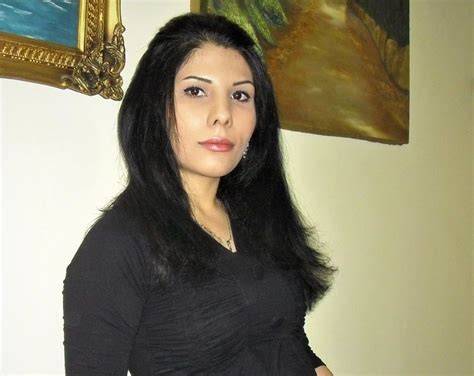
Neda Amin est une journaliste et blogueuse iranienne qui a quitté l’Iran en 2014 pour la Turquie. Après avoir collaboré avec un site d’information israélien, elle a été menacée d’expulsion vers son pays d’origine et a demandé à rejoindre Israël, où elle espérait obtenir l’asile politique.
Son parcours est exceptionnel à plusieurs titres. L’Iran n’a pas de relations diplomatiques avec Israël et appelle fréquemment et ouvertement à sa destruction. Pourtant, Neda Amin affirme avoir toujours ressenti une forte attirance pour son identité juive et considère Israël comme le pays où elle peut enfin se sentir en sécurité et libre.
Une journaliste iranienne menacée d’expulsion depuis la Turquie
Neda Amin, an up-and-coming journalist, left Iran and moved to Turkey in 2014 when she was 29 years old and continued her writing career there.
En Turquie, elle a poursuivi son activité de journaliste, mais sa collaboration avec un média israélien a attiré l’attention des autorités. Lors d’un interrogatoire, Neda a demandé : « Is it illegal to write for Israeli media? »
The Turkish police allowed that it wasn’t against the law in Turkey. “So why all the investigations?” she asked. “Because,” they answered, “we don’t like working with Israel, and we don’t like you working with Israel."
Les autorités turques lui ont finalement adressé un ultimatum particulièrement inquiétant : elles envisageaient de l’expulser de Turquie vers l’Iran.
Turkish authorities gave her a terrifying ultimatum: they were going to expel her from Turkey.
« Germany and the USA were willing to give me asylum », explique Neda. Mais un pays l’attirait plus que tous les autres : Israël.
Une demande d’asile soutenue par des journalistes israéliens
Israël a proposé d'accorder l'asile à une blogueuse iranienne basée en Turquie et qui risque d'être expulsée vers son pays d'origine en raison de sa collaboration avec un site d'information israélien.
Selon Times of Israël qui héberge son blogue écrit en persan, Neda Amin a quitté l'Iran en 2014 pour la Turquie. Elle se bat devant les tribunaux pour éviter l'expulsion et cherche un pays d'accueil.
Un appel a été lancé par plusieurs journalistes israéliens afin qu'un visa spécial lui soit octroyé par les autorités de Jérusalem. Cet appel a été entendu par Aryeh Deri, ministre israélien de l'Intérieur.
« Il s'agit d'une journaliste dont la vie est en grand danger », a-t-il déclaré dans un communiqué.
Bulut’s article in Arutz Sheva, an ultra-right Jewish Orthodox Israeli media network that often identifies with extreme religious Zionism, highlighted the fact that the Iranian writer had been in Turkey for her own safety after leaving Iran in 2014, but would soon be deported against international law back to Iran by the Turkish powers that be.
Bulut wrote that Amin’s time in Turkey was coming to an end and even though the Iranian had been granted refugee status by the UNHCR, this very organization was refusing to help her.
Israel’s Interior Minister Aryeh Deri, of the ultra-orthodox Shas party, agreed to allow the fleeing blogger to travel from Turkey to Israel on a tourist visa.
“This is a journalist whose life is in real danger because she wrote for an Israeli news site,” Deri said.
Considering Israel’s relationship with the fundamentalist Islamic regime of their not-so-distant geographic neighbor, this is a very rare occurrence.
Originally slated to arrive in Israel earlier this week, the asylum seeker did not board her scheduled flight.
“I don’t think I could’ve lived with myself if I had found out that she was on a plane back to Iran,” Horovitz said.
Le rôle du Times of Israel
Desperate, Neda called David Horovitz, editor of The Times of Israel. He didn’t recognize her name, nor could she recall the pieces she’d written for his paper. He also had no idea of her Jewish heritage.
« Mr. Horovitz, please save me », lui a-t-elle demandé au téléphone.
Eventually, Neda was cleared to board a flight to Israel where she could apply for political asylum.
Son arrivée en Israël a été rendue possible après l’intervention de journalistes et de responsables israéliens qui estimaient que son retour en Iran pouvait mettre sa vie en danger.
Une identité juive héritée de son père
« My father was Jewish », raconte Neda.
Growing up in Tehran with a Jewish father, she always felt a strong pull of Jewish identity.
« In Iran, the father determines the religion of their children », et Neda ne s’est jamais considérée comme musulmane comme beaucoup de ses amis et camarades de classe.
Avec un père juif, elle pouvait techniquement revendiquer la citoyenneté israélienne en vertu du droit au retour. Cependant, elle ne disposait pas des documents familiaux nécessaires et ne pouvait pas retourner en Iran pour les récupérer.
With a Jewish father, she technically is able to claim Israeli citizenship under the country’s Right of Return, but she lacks the necessary family documents and can’t go back to Iran to retrieve them.
L’accueil en Israël et la rencontre avec Natan Sharansky
L’un des premiers appels téléphoniques reçus par Neda en Israël venait de Natan Sharansky, ancien dissident soviétique qui avait passé neuf ans dans un goulag russe avant de s’installer en Israël en 1986.
One of Neda’s first phone calls in Israel came from Natan Sharansky, the famed Soviet refusenik who spent nine years in a Russian gulag, moved to Israel in 1986, and later served as Chairman of the Jewish Agency in Israel.
« He called me and said 'Welcome to Israel Neda…' I couldn’t believe it when I spoke with him the first time. He was one of my heroes from the time I was fifteen years old », explique Neda.
« But I visited him here! »
Sharansky a organisé pour elle des cours d’hébreu. Au début, il semblait que sa demande d’asile allait être traitée rapidement et sans difficulté.
Sharansky arranged for Neda to take Hebrew classes and at first it seemed that her asylum application would be expedited smoothly.
Une procédure d’asile qui s’éternise
Mais les mois et les années ont passé sans que Neda obtienne officiellement le statut de réfugiée.
But as the months and years have dragged on, this has not been the case.
Neda has been living in Israel for over two and a half years and still doesn’t have official asylum status.
Sans autorisation permanente de séjour, elle n’a pas pu travailler.
Without permanent leave to remain in the country, Neda hasn’t been able to work.
La situation est pour elle extrêmement frustrante et douloureuse. Elle connaît parfois des moments de profond découragement.
The situation is incredibly frustrating and heart-breaking for Neda. At times she feels close to despair.
Son cas est unique, mais d’autres citoyens iraniens ont également commencé à se tourner vers l’État juif en demandant la possibilité d’y obtenir l’asile.
Des Iraniens demandent de l’aide à Israël
Neda's case is unique, but shockingly, other Iranian citizens have been turning to the Jewish state in recent months, saying they would like to claim asylum there.
« I am often put in jail for political reasons », écrivait récemment un Iranien au ministère israélien des Affaires étrangères.
Two of his uncles had been put to death by the regime already.
« I would like to escape this slow death. Israel is my dream », écrivait-il sur un compte de réseau social administré par le gouvernement israélien.
In recent months, thousands of Iranians have been contacting Israel, asking for help, guidance, news - even permission to immigrate to the Jewish state.
Malgré la diabolisation d’Israël en Iran, de nombreux Iraniens ordinaires cherchent à entrer en contact avec l’État israélien.
Despite the demonization of Israel inside Iran, many ordinary Iranians are clamoring for contact with israel.
« They’re asking for all kinds of assistance: medical advice, information about immigration to Israel or other countries; they want to know how to make business or simply want to tell us that they hope that their country will one day establish diplomatic relations with us », a expliqué Yiftah Curiel, responsable de la diplomatie numérique au ministère israélien des Affaires étrangères.
Cette hausse des demandes a été rendue publique après l’annonce d’une augmentation très nette des messages adressés aux services israéliens par des ressortissants iraniens.
“The Iranian people are not our enemies. The emergence of thousands of ordinary Iranians seeking to contact or even move to the Jewish state gives hope that perhaps a new generation of Iranians will seek warmer relations with their Jewish neighbors.
« Our ministry’s social media platform allows us to be in direct contact with millions from across the (Middle Eastern) region, among them many from Iran », a observé Yuval Rotem, directeur général du ministère israélien des Affaires étrangères.
Le président iranien appelle les États-Unis à changer de ton et d'approche envers l'Iran
La vie quotidienne de Neda à Jérusalem
When I told her that Iranians were expressing a desire to apply for political asylum in Israel, Neda seemed incredulous.
Malgré les difficultés liées à l’attente de sa demande d’asile, Neda a trouvé de nombreux aspects positifs à sa vie en Israël.
Despite the many frustrations Neda’s gone through as her asylum application awaits its approval, she still has found many things to love about Jerusalem.
Elle s’est fait de nombreux amis et affirme que les Israéliens ordinaires l’ont accueillie chaleureusement.
She’s made many friends and found that ordinary Israelis have greeted her warmly.
« I love Israel’s police », dit-elle, en les comparant à la police terrifiante qu’elle a rencontrée en Turquie et qui la menace d’emprisonnement, voire d’exécution, si elle retourne un jour en Iran.
Israeli police « are so kind, conscientious, well-mannered, gentlemanly… ».
En Israël, Neda peut enfin se sentir en sécurité et libre.
In Israel, Neda can finally feel safe and free.
Le Mur occidental, un lieu de liberté
Le lieu préféré de Neda dans tout Israël est le Mur occidental.
Neda’s favorite place in all of Israel is the Western Wall.
« I feel free when I’m there. I feel all the Jewish prophets are there. I feel that they are all protecting me. Abraham, Isaac, Yaakov, Moshe, David, all. »
Le Mur occidental représente pour elle un espace de sécurité spirituelle et d’appartenance, après les années passées en Iran puis en Turquie.
Une attente douloureuse malgré l’espoir
Malgré le chagrin et l’incertitude liés à l’absence de statut officiel, Neda espère toujours être autorisée à rester en Israël.
Despite the heartbreak of not being able to know for sure that she can gain formal asylum in Israel, Neda hopes against hope that she’ll be allowed to remain.
Pour Neda Amin, l’expérience israélienne est à la fois frustrante et heureuse.
For Neda Amin, one of the few recent Iranian asylum seekers able to make it to Israel, the experience has been both frustrating and joyous.
Elle décrit Yom HaAtzmaut, la fête de l’indépendance d’Israël, comme son jour préféré.
Neda describes Yom HaAtzmaut, Israel’s Independence Day, as her “favorite day”.
« Israel feels like my country », a déclaré Amin dans un anglais hésitant à son arrivée en Israël.
Le ministère israélien des Affaires étrangères ne peut cependant agir que dans certaines limites lorsqu’il s’agit d’accompagner les demandes d’asile et les projets d’immigration de ressortissants iraniens.
As thousands of other Iranians turn to Israel in hope, Israel’s Foreign Ministry can only do so much.
tags: #journaliste #iranienne #demandeuse #asile #en #israel